Yes, you can fit wardrobes around a chimney breast, and in most bedrooms it is the single best use of the space. The two alcoves either side of the breast are usually between 700mm and 1100mm wide and already enclosed on three sides, which makes them close to ideal for built-in storage. This guide explains the options, the depths that actually work, and what to do about an old fireplace.
On this page
Can You Fit Wardrobes Around A Chimney Breast?
Almost always, yes. A chimney breast creates two recesses that are already the right shape for a wardrobe, and building into them uses space that would otherwise hold nothing but a chair or a pile of boxes.
The reason freestanding furniture struggles here is simple. A shop-bought wardrobe comes in fixed widths, so in an alcove of 860mm you end up with a 750mm wardrobe and a 110mm gap that collects dust. Made-to-measure units are built to the actual opening, so the full width becomes usable hanging space.
Older houses rarely have square alcoves. Walls lean, plaster bows and the two sides are often different widths. Each unit is scribed to the wall on site, which is why a bespoke fitted wardrobe sits flush where a flat-packed one leaves visible gaps.
What Are The Options For The Alcoves?
There are three approaches that work well, and the right one depends on whether you need maximum hanging space, a mix of storage, or to keep the room feeling open.
Full-height wardrobes both sides
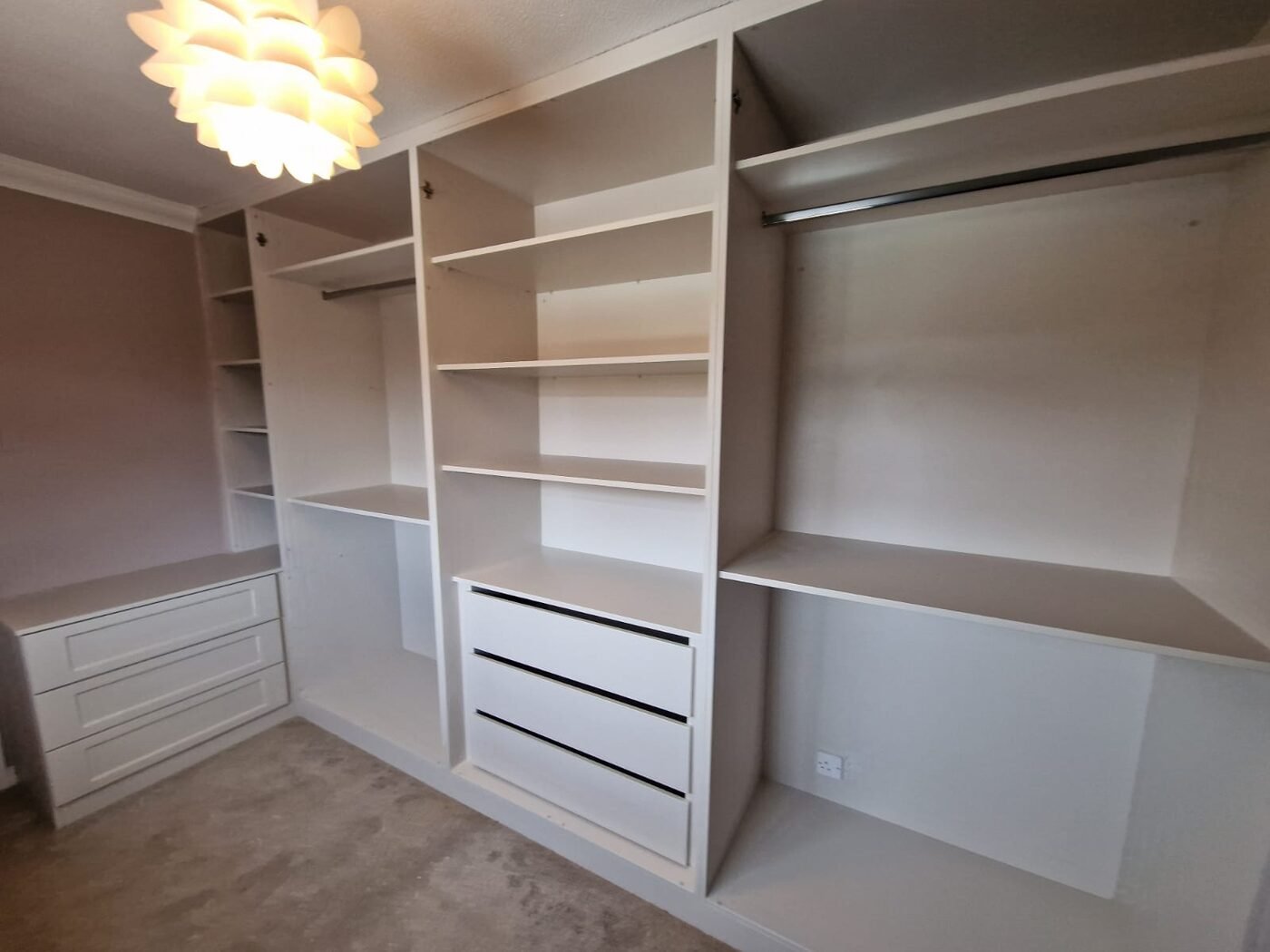
Floor-to-ceiling units in both alcoves, giving the maximum hanging and shelf space. Best where storage is the priority and the room is a reasonable size. More layouts are in our built in wardrobe ideas.
Wardrobe one side, drawers the other
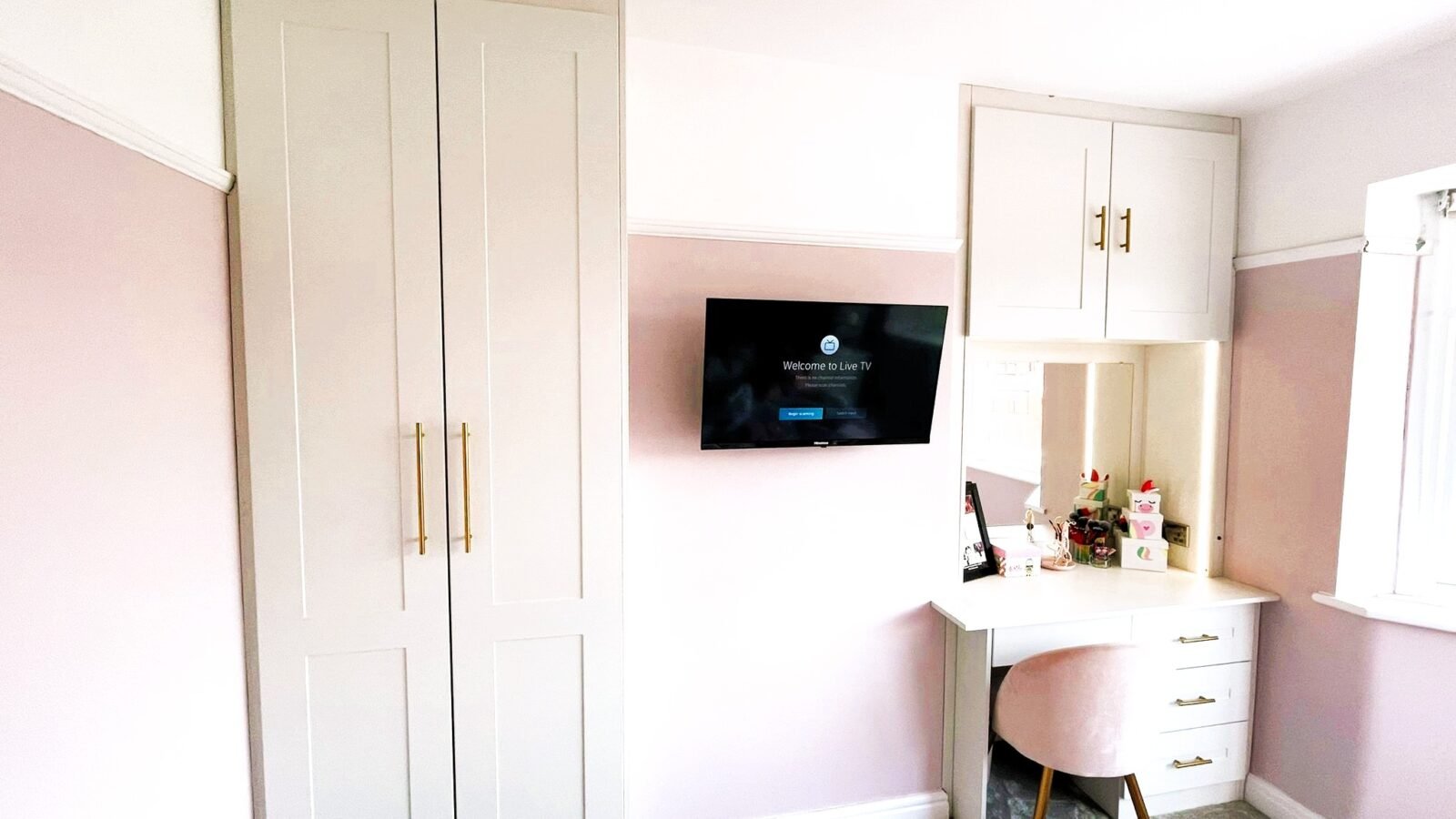
A tall wardrobe in one alcove and a lower run of drawers in the other, leaving wall space above for pictures or a mirror. This keeps the room feeling less enclosed.
Wardrobes with open shelving
Closed storage below and open shelves above, or a window seat between the alcoves. Useful in period rooms where you want the chimney breast to stay a feature.
If the room is small, look at our guide to bedroom storage ideas for ways to combine these with over-bed units.
Should The Wardrobes Run Across The Chimney Breast?
Running units across the full wall gives a cleaner, more built-in look, but it costs you floor space and loses the fireplace as a feature. Keeping the breast exposed is cheaper and keeps the room feeling larger.
| Alcoves only | Across the whole wall | |
|---|---|---|
| Floor space used | Less, breast stays clear | More, wall becomes one depth |
| Look | Period features kept | Flush, contemporary |
| Storage gained | Two separate runs | Continuous run, shallow over breast |
| Typical cost | Lower | Higher, more materials |
| Best for | Period homes, smaller rooms | Larger rooms, modern finishes |
Where the wardrobes do run across, the section over the chimney breast is usually only 200mm to 300mm deep, so it suits shelving, shoes or folded items rather than hanging.
How Deep Can Alcove Wardrobes Be?
A wardrobe needs about 580mm to 600mm of internal depth to hang clothes front to back on a standard rail. Many alcoves are shallower than that, and there are two reliable ways round it.
The first is a pull-out side-hanging rail, which turns the clothes through ninety degrees so they hang along the depth of the unit rather than across it. This works in alcoves from about 350mm deep.
The second is to build the unit slightly proud of the alcove, bringing the doors forward to gain the depth needed and packing out the sides so it still reads as built-in. In practice this is what we do most often, because the extra 50mm to 100mm is rarely noticeable once the doors are on.
Worth knowing: door style affects usable space too. Hinged doors need clearance to swing open, which matters when a bed sits close to the alcove. Our guide on sliding versus hinged wardrobe doors covers the trade-off in more detail.
What About The Old Fireplace Or Flue?
If the chimney is no longer in use it can usually be boxed in, but the flue must stay ventilated. Sealing a chimney completely can trap moisture and cause damp to show through the plaster.
The normal approach is to fit an air brick or a capped vent so air can still move through the stack, then build the furniture around it. If the fireplace is still live, or you are unsure whether the flue has been capped correctly at roof level, that needs checking by a qualified professional before anything is enclosed.
Where a cast iron surround is being kept, we design the units to sit either side without touching it, so the feature stays visible and nothing is fixed into the original stonework.
Common Questions
Do alcove wardrobes add value to a house?
Built-in storage is consistently well received by buyers because it uses space that would otherwise be wasted, particularly in older properties with smaller bedrooms. It is not a guaranteed return, but a tidy, well-fitted alcove run presents far better than mismatched freestanding furniture.
Can you fit wardrobes around a chimney breast in a small box room?
Often yes, though the depth question above becomes the deciding factor. In very tight rooms a shallower unit with side-hanging rails, or drawers rather than hanging, usually makes better sense. See our guide to fitted wardrobes for awkward bedrooms.
Will the two sides match if the alcoves are different widths?
Yes. The carcasses are built to each opening, and the door widths and any handles are set out so the pair reads as symmetrical even when the openings are not. This is one of the clearest advantages of made to measure over off the shelf.
How much do alcove wardrobes cost?
Cost depends on the width, the finish and the interior fittings rather than on the alcoves themselves. Our fitted wardrobe cost guide explains what moves the price up or down.
Thinking about your own alcoves? We design, build and fit wardrobes around chimney breasts in homes across Warrington and Cheshire. Book a free home design visit and we will measure both alcoves precisely, show you 3D designs and give you a fixed quote. You can also browse recent work in our gallery or get in touch to talk it through.
Chimney breasts turn up in almost every period property we work in. They are especially common in the Victorian terraces around fitted wardrobes in Crewe and the older streets of fitted wardrobes in Chester, where the alcoves either side are rarely the same width.